



Many of us have probably experienced moments when memory plays strange tricks on us. You may have spent your whole life being certain that your favorite film ended in a particular way. Or for years you clearly remembered exactly what the logo on your favorite chocolate bar looked like. You were so sure of all this that the slightest doubt never even occurred to you. But then the original source appears in front of you again — perhaps you rewatch the film or buy that same chocolate bar — and reality turns out to be different from what you remembered. A strange mix of surprise and mild irritation hits you at once.
We are used to thinking of memory as a reliable internal storage system in which everything is neatly arranged and kept in order. But moments like these suddenly reveal that something in our heads has imagined, added, or rewritten certain details so convincingly that the result can be genuinely shocking.
If we look at this phenomenon on a larger scale, things become even more interesting. Unlike purely personal memory errors, the same distortion can appear in large groups of people at once. People of different ages and from different countries may all be convinced that they clearly remember something that never actually happened. This creates a strong sense of cognitive dissonance: can hundreds or even thousands of people really be wrong in exactly the same way? Surprisingly, yes. Such cases make us question not only the accuracy of our own memories, but also the way collective perceptions of the past are formed.
Situations in which reality does not match what we “clearly” remember are often referred to as the Mandela effect. There is nothing mystical about it — it is a vivid example of how human memory works, and that is what we will explore in more detail below.
What Is the Mandela Effect?
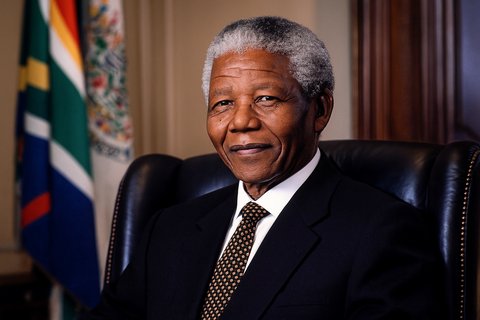 The Mandela effect is one of those phenomena that appeared unexpectedly and quickly attracted widespread attention. Its story began with a simple observation. In the early 2010s, Fiona Broome noticed that a surprisingly large number of people around the world seemed convinced of the same thing: that Nelson Mandela had died in prison sometime in the 1980s. And these people did not merely have a vague impression. Some described scenes, television reports, public reactions, and even their own emotions connected with hearing the “news”. These were not isolated memories, but something closer to a shared collective certainty.
When it later became clear that no such death had occurred in the 1980s, and that Mandela had in fact been released and later served as President of South Africa, many people experienced something close to shock. Something did not fit: “How can that be? I remember it! And other people remember it too!” This strange mass discrepancy is what gave the phenomenon its name — the Mandela effect.
Once people began discussing it, they discovered that there were many similar examples of “collective memories” around the world. In fact, they seem to appear everywhere.
For example, many people are convinced that Darth Vader says, “Luke, I am your father.” But in Star Wars, the actual line is different: “No, I am your father.”
Another famous example comes from the game Monopoly. In many people’s minds, its mascot — the wealthy mustached gentleman — wears a monocle. The image feels so familiar that some people are ready to argue about it endlessly. Yet in reality, he has never had one.
There is also the well-known KitKat example. Thousands of people are convinced that there used to be a small hyphen between “Kit” and “Kat”. Some remember seeing it on the packaging at school, others recall advertisements, and some insist they even held products with that spelling in their hands. Yet the logo has never officially contained such a hyphen.
Or take Pokémon. Many fans are convinced that Pikachu once had a black stripe or marking on its tail. “It was definitely there!” people insist. But in the official design, that black marking is absent and has not appeared in the standard versions of the character.
These examples are especially interesting because they involve not two or three people, but very large groups. The mistake begins to feel almost “normal”, and the fact that so many people share it makes it seem even more believable. This can strengthen the effect through a kind of positive feedback: the more people are convinced of the same thing, the harder it becomes to believe that everyone could be mistaken.
This has naturally produced a variety of mystical explanations: shifts between parallel realities, glitches in the matrix, traces of alternative timelines. Psychologists, however, treat the phenomenon much more simply. The Mandela effect is not evidence of other universes. It is a convenient name for a particular kind of widespread memory distortion.
It became so popular precisely because it reveals an uncomfortable but important truth: our memory is not an exact mirror of the past. It can add something of its own, merge details in strange ways, and present us with a vivid but inaccurate picture. And when so many other people remember the same thing, how easy is it to doubt their “certainty”?
How Memory Works and Why It Makes Mistakes
 We often imagine that memory works like a video recorder. Something happens, a file with a unique name is stored in the brain, and when needed we simply find it and play it back. In reality, memory works very differently. Each time we remember something, the brain does not retrieve a complete recording from an archive. Instead, it reconstructs the memory almost like a puzzle. It combines fragments of facts, emotions, images, logic, and expectations into a coherent picture. It does this so quickly and seamlessly that we barely notice the process. It feels as though we have simply “recalled” something, when in fact the memory has been assembled again.
When details are missing, the brain often fills the gaps automatically. It does not like fuzzy blanks in a story about something that happened to us or that we once heard about. It completes the picture using our existing experience, stereotypes, other people’s stories, films, memes, and our general sense of “how things usually happen”. This process is often described as confabulation. In everyday life, milder forms of this kind of reconstruction happen constantly without us noticing.
Now add emotion. Strong feelings — fear, joy, surprise — do not necessarily make memories more accurate. On the contrary, they can increase our subjective certainty that an event happened exactly as we now imagine it. We may remember not the event itself, but how we felt at the time, and later treat the intensity of that feeling as proof that our version must be correct: “I experienced it so vividly, so it must really have happened that way.”
Another trap is source confusion. We may remember a line from a film but gradually forget where we first encountered it. We may see a meme, hear someone retell a story, or read a comment, and a few years later feel completely certain that we witnessed the original ourselves. The brain does not always preserve the source of information as reliably as the content itself. Coherence is often more important to memory than provenance.
Stereotypes play a role too. If the image of a “wealthy capitalist” is commonly associated with a top hat and monocle, then a monocle can easily become attached in memory to the Monopoly mascot even if it was never there. This is not simply “bad thinking”; it reflects the brain’s tendency to use familiar patterns to process information efficiently.
One especially important point is that confidence in a memory is not the same as accuracy. We can be completely, one hundred percent certain and still be badly mistaken. This is one of the key reasons the Mandela effect feels so compelling. It does not merely show that memory can fail. It shows that memory can fail in a way that feels elegant, logical, and utterly convincing.
And the more often we return to a particular memory, the more strongly the latest reconstructed version can become reinforced. In other words, the memory may be “cemented” not in its original form, but in the form in which the brain rebuilt it most recently. Over time, an error can gradually create an internally consistent version of reality.
Modern psychology has long treated memory as a reconstructive process. The ideas described above are rooted in classic psychological research. In the first half of the twentieth century, Sir Frederic Charles Bartlett showed how people reconstruct the past using familiar schemas and expectations. Later, Elizabeth F. Loftus demonstrated experimentally how easily false memories can form and how strongly they can be influenced by context, wording, and social information. These ideas are now foundational in cognitive psychology and help explain phenomena such as the Mandela effect.
Group Memory and Collective Errors
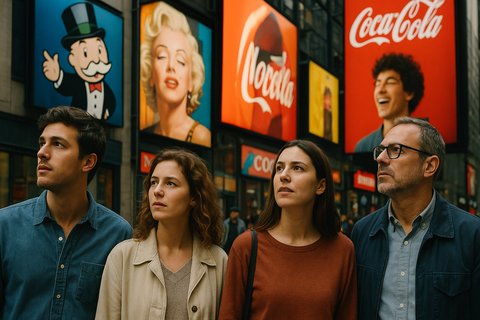 One of the most interesting aspects of the Mandela effect is group memory — cases in which the same error appears across large numbers of people. It is one thing to discover that you personally mixed something up, and quite another to learn that many people around you remember the same thing in exactly the same way. The logic feels obvious and difficult to argue with: “Surely everyone cannot be wrong at the same time.” The paradox is that they can.
Human memory is deeply social. We live among other people, constantly compare our knowledge with theirs, and often use information from our surroundings as a reference point without even noticing. If someone confidently says, “Yes, that is exactly how it happened!”, the brain can take this as confirmation, increasing our own sense of certainty. This is one of the ways everyday suggestion can work.
We do not simply copy another person’s opinion word for word. Instead, we may build our own version of what happened using the information they provide. This is where a form of social confirmation comes into play: a memory feels more trustworthy when several people share it. The larger the group, the stronger the sense that the event “must” have happened that way. That is one reason collective memory errors can be so persistent — they are continually reinforced by the social environment.
Culture also plays a huge role. Films, advertising, television, and the internet constantly create images and spread them widely, and we may carry those images with us for years. Over time, quotations become simplified, visual details are smoothed out, and complex material turns into convenient, recognizable forms. Eventually these cultural versions may push the original aside. We remember not the source itself, but the processed version. And if that version is the one we have seen and heard most often, it becomes a very strong candidate for what remains in memory.
In recent years, one particularly powerful tool for amplifying this process has been the meme. A meme does not have to be precise; its job is to be recognizable. It fixes a simplified, often distorted version of reality and reproduces it on a massive scale. After a while, the meme version begins to live a life of its own, while the original becomes secondary or is forgotten altogether. And before long, we may feel completely certain that this was the way the story really happened and ended.
An important point is that a shared error often stops feeling like an error. When a distorted idea is accepted by a group, it begins to feel true. It does not trigger internal resistance because it no longer looks unusual. In fact, doubt may start to feel suspicious: “Why should I question it if everyone remembers the same thing?” Few people enjoy feeling like the odd one out.
This is how a collective version of the past can form. It is coherent, familiar, and socially reinforced. It settles easily into memory and becomes what we casually call a “shared memory”.
How to Live with the Mandela Effect in Mind
 The Mandela effect can be both surprising and sobering. It illustrates a simple truth: our own memory should not be treated as an absolute and perfectly reliable source. We can feel completely certain and still be wrong. But understanding this can also be extremely useful in everyday life.
The first thing to keep in mind is our tendency to overestimate our own certainty. In arguments and conflicts, we often reach for statements such as “I remember exactly”. The Mandela effect takes some of the force out of that argument. It does not mean that confidence always equals error — not at all. But it reminds us to treat certainty critically: perhaps we do not remember the situation quite as accurately as we think. Sometimes that realization alone is enough to keep an important conversation from reaching a dead end.
The second important point concerns communication with other people. If someone describes an event differently, that does not automatically mean they are lying, manipulating, or acting with bad intentions. They may simply be reporting a different version preserved in their memory. Recognizing this can reduce tension, especially in family conversations and conflicts about who said what and how. Sometimes it is much more useful not to prove who is right, but to accept that memories can diverge on their own — and perhaps even turn the disagreement into a joke.
In the workplace, understanding the Mandela effect can serve as a useful defense against illusion. Meetings, agreements, and informal verbal instructions are perfect conditions for collective distortion and misunderstanding. People can sincerely believe they agreed on one thing, only to discover later that each person formed a different picture of the task and its goals. Recognizing the limits of memory encourages simple but effective practices: write agreements down, clarify wording, and do not rely on memory alone.
At the same time, it is important not to swing to the opposite extreme — paranoia or total distrust of ourselves and others. The Mandela effect does not mean that memory is useless or should never be trusted. It simply shows that memory has limits. A healthier position is to trust our recollections while remaining willing to verify them, especially when important decisions or relationships depend on the details.
In a sense, understanding the Mandela effect can make us gentler and more tolerant. Toward ourselves, because a memory error stops looking like a personal failure. Toward others, because anyone can be sincerely mistaken without bad intentions.
The Mandela effect offers a vivid illustration of how the human brain works. It reminds us that memory is not an archive, but a living system that continually works with the past, adapting recollections to the current context, emotions, and social environment. This phenomenon teaches humility about our own certainty, attention to facts, and tolerance toward other people’s perspectives. It helps us understand how people think and may help us coexist with one another more easily. And perhaps that is the greatest value of understanding the Mandela effect: it can make us more humane.