



Sleep seems like an extremely ordinary phenomenon. You close your eyes — and somehow drift away. In the morning, you wake up and get back to life. But sometimes it happens differently: you are exhausted, close your eyes, wait impatiently for sleep, and it simply does not come. Or it comes, but it is restless and fragmented, as if the brain were still tense and unable to calm down. We tend to think of sleep as rest, but in reality it is much more complicated. It is not an on-off switch, but a complex ritual of recovery involving the body, the brain, and the mind.
Psychology has been studying this phenomenon for a long time. Why can’t we fall asleep? Why do we wake up tired, as if we had not rested at all? Why does sleep sometimes come easily, while at other times it slips away — especially when we are waiting for it most?
The answers to these questions lie not only in pills and bedtime rituals, but also in the way we think, feel, perceive ourselves, and look at life.
In this article, we will try to understand what sleep is from the perspective of psychology and what can go wrong with it. And how we can try to bring sleep back when it becomes extremely difficult to fall asleep.
What Happens When We Sleep
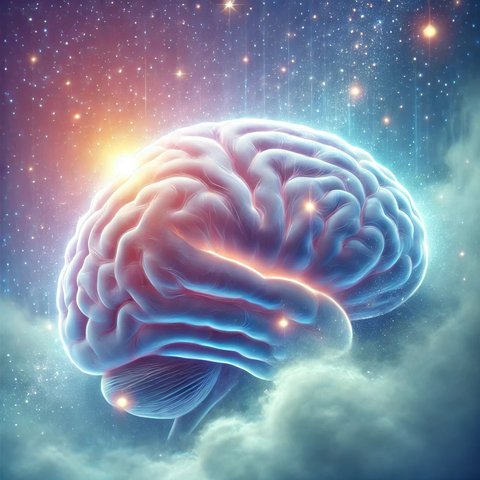 At first glance, a sleeping person looks as if someone has simply pressed a switch and turned them off. They lie there with their eyes closed. No thoughts, no problems. From the outside — complete calm. But inside the sleeping body, intense activity is taking place. While the body is relaxed and still, the brain begins a huge amount of work, almost like a factory running a night shift — sorting, repairing, cleaning, and taking out the trash. A kind of brain cleaning service, only without calling a professional cleaning company.
Our sleep is not one continuous stream, but a sequence of stages. It comes in waves of roughly an hour and a half: first non-REM sleep, then REM sleep. And this repeats several times during the night. These stages perform different tasks, and if even one of them is disrupted, there is a good chance of starting the next day feeling unrefreshed.
Non-REM sleep is the phase of deep disengagement. At this point, the body focuses on restoration: breathing slows, body temperature drops, and the brain becomes quieter. Well, almost quieter. It switches into a kind of background mode and deals with maintenance and adjustment: it supports immune function, activates hormonal processes, and helps cells recover. Everything that has been strained or damaged during the day is gradually restored at this stage. Here, our biology is in charge of a process it created itself — planning and carrying out the work in its own way.
Then comes REM sleep (REM — Rapid Eye Movement). This is the stage in which we dream. Sometimes the dreams are absurd and hilarious and leave us in a good mood for the entire day. Sometimes they are frightening and so realistic that it is hard to tell whether you are still asleep or already awake. Even after waking, we do not always immediately understand whether something really happened or whether it was only a dream. We meet people who have long been gone, resume conversations we had almost forgotten, or suddenly discover that we can fly, just as in childhood fantasies. All of this may seem like ordinary fantasy, but in fact, while these dreams unfold, the brain is actively processing accumulated information. It combines fragments of daytime experiences, memories from deep storage, worries, and desires, and turns them into nighttime films that can rival Hollywood. Sometimes they are completely illogical; sometimes they are astonishingly detailed and almost real.
But if we continue the movie analogy, dreams are not simply entertainment. They are one way the brain works through things that were not fully processed during the day. Perhaps you did not have time to think about something, suppressed irritation, or distracted yourself from a difficult thought. At night it may return anyway — perhaps as an endless staircase or a room in which you are looking for someone you cannot find. This is not random playback; it is active work by the unconscious aimed at organizing the information we carry.
The body is not completely at rest either. Despite outward stillness, muscles may twitch during sleep, breathing patterns may change, and body temperature may fluctuate. During vivid dreams, one person’s face may tense, another person’s fingers may move. This is normal: the body participates in the processing that takes place during sleep even without our conscious control.
And then there are those morning insights. Many of us know the feeling of waking up and suddenly knowing what to do, even though the day before we had no idea where to begin or how to solve a problem. Or perhaps you spent all day wrestling with a task, and in the morning the solution appears almost by itself within minutes. This is not magic. It is the result of the brain’s work during the night. While you slept, it kept testing different combinations, sorting and connecting information until, at some point, it found the right one.
Healthy sleep is a vital part of our lives: the sleeper may look completely calm from the outside, while intense activity continues inside.
How Lack of Sleep Turns Into a Problem
 One day, sleep may suddenly stop coming without any obvious signal or warning from the body. At first it seems accidental: you were overworked, stressed, or ate too late. One sleepless night — no big deal. But then comes the second night, then the third, and once again you find yourself lying in bed with your eyes closed, apparently relaxed, while inside there is a tension that refuses to fade. Thoughts keep running, the body feels uncomfortable, and the tension will not release. The harder you try to fall asleep, the farther sleep seems to move away. And, naturally, you have to get up early tomorrow, you have difficult and important work that requires concentration and therefore good rest beforehand.
Sleep disruptions like these are often treated as something minor — like a runny nose or a mild illness that you can simply wait out until everything returns to normal. But in practice, that is not always the case. Lack of healthy sleep is not merely inconvenient. It is a sign that something in the system has gone wrong. If a person regularly fails to get enough sleep, the effects become difficult to ignore: memory worsens, attention declines, irritability becomes constant, and life itself begins to feel unstable and depressed.
Insomnia can take different forms. There is acute insomnia, which may appear suddenly after a difficult conversation, stress, an emotional breakdown, or because of an important event that is about to happen. In such cases the body is ready for rest, but consciousness gets in the way, like an annoying neighbor who refuses to turn off the light or starts playing loud music. In most cases sleep returns once the stressors weaken or enough time has passed. But sometimes things develop differently and sleep remains disturbed for a long time. Then we are dealing with chronic insomnia — a condition in which real problems begin to appear.
If a person does not sleep for one or two nights, they will of course feel tired. But when insomnia continues, it affects not only the body but also the mind. Things begin to fall apart: emotional stability declines, the person becomes anxious, gloomy, and irritable. Thoughts become confused, logic turns fragmented, and even ordinary activity requires effort. Many people describe this state as “living through cotton wool” — everything is happening, but somehow not quite to you, more as if it were taking place nearby. Anxiety gradually increases and, in turn, makes insomnia worse. This creates a vicious circle: you cannot fall asleep because you are anxious, and the source of your anxiety is the lack of normal sleep.
Very often, insomnia accompanies depression. Sometimes it appears first — as an early warning sign that something is wrong internally. At other times, it develops against the background of an already established depressive state. When a person loses the ability to sleep normally, they lose an important point of support, making even simple daytime tasks much harder to manage.
Medical history contains rare and almost unbelievable cases. One Vietnamese farmer, for example, claimed that he had not slept since the 1970s. He appeared energetic, continued to work on his farm, and said he did not feel tired. Scientists who discussed the case suggested that he may simply have failed to notice brief episodes of brain shutdown known as microsleeps, which can last only a few seconds. There are also very different and far more tragic examples — such as fatal familial insomnia, a rare genetic disease in which a person gradually loses the ability to sleep altogether. The condition has no curative treatment, cannot be stopped, and generally ends in death within months after the first symptoms appear.
Fortunately, for most people the situation is far less dramatic. Still, the habit of constantly sleeping too little in order to wake earlier and get more done can cause serious harm. Many people treat it almost as a badge of honor: I manage everything, I am highly productive, and I spend no more than four hours on “useless” sleep. In reality, this is not an achievement but a serious risk. Chronic sleep deprivation is like running an engine without oil: it still works, but it is already operating at the edge of its capacity. From the outside, you may still look fine — working, acting, making important decisions, getting everything done. But inside, wear and tear is accumulating and may eventually lead to serious breakdowns.
Sleep is not weakness and not wasted time. It is a vital process that keeps us whole — physically, mentally, and emotionally. When sleep breaks down, everything else begins to break down with it.
What Psychology Says and How It Can Help
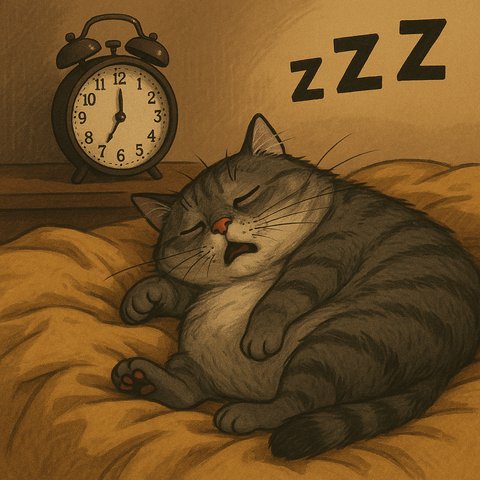 When someone faces insomnia, the first thing they tend to look at is the external environment: “Maybe the bed is uncomfortable. Maybe the pillow is wrong. Are the curtains letting in too much light? Is the window closed?” All of these things can certainly matter. But if you have already tried every sleeping position, changed the bedding, made herbal tea, and sleep still will not come, then perhaps the problem is not in the surroundings. The cause may lie in our thinking and in the way the process of falling asleep works.
Psychology has long noted that for many people insomnia begins not in the body, but in thought. You go to bed, close your eyes, hope for a good night’s sleep — and suddenly everything inside you wakes up. A stream of memories begins: the conversation in which you could have answered differently; the list of important tasks for tomorrow; anxious thoughts about the future; random fragments from the past. In other cases, there may not even be clear thoughts, just a heavy restless feeling that refuses to settle. And soon you cannot fall asleep because your mind will not let go.
One of the most effective psychological approaches for problems like this is cognitive behavioral therapy. Its basic idea is that our feelings, behavior, and physiological reactions are directly connected with the way we think. This means that by changing how we relate to our thinking, we can also change how we fall asleep, sleep, wake up, and therefore how we feel during the day.
Many people with insomnia experience a strange shift. Nighttime sleep stops being something welcome and natural — a chance to relax and recover — and becomes the next difficult battle. “I have to get enough sleep or tomorrow will be a disaster”, “I need to fall asleep faster because I have to get up early” — familiar thoughts? But these very thoughts increase anxiety and trap the person in a vicious circle. CBT helps break this circle: to notice automatic thoughts, question them, and replace them with calmer and more realistic ones. This is not about “positive thinking”; it is about restoring a comfortable inner state in which you can stop fighting for sleep and allow yourself to fall asleep calmly and without effort.
Along with working with thoughts, psychology offers many practical techniques that can help restore healthy sleep. One of them is stimulus control. The idea is to make the bed associated with sleep rather than with rumination, reading the news, messaging, or watching series. If you cannot fall asleep for a long time, it is better to get up, sit in another room or another space, do something neutral, and return to bed only when you feel genuinely sleepy. In this way the brain learns: bed = sleep, not lying awake with your eyes closed or reading news on a smartphone.
Evening rituals can also help. This does not mean some magical ritual from a movie, but simple everyday actions: a warm shower, turning off gadgets, half an hour without screens, soft lighting, a little reading. All of this can signal to the brain that the day is over and it is time to move gradually toward quiet.
Another important point is physical relaxation. Many people do not even notice how tense they are in the evening: shoulders raised, jaw clenched, breathing shallow and rapid. Progressive muscle relaxation, box breathing, and slow body scans can help bring attention back to the body and reduce the tension that interferes with sleep.
Research shows that in the long term, psychological methods are among the most effective approaches, including when compared with sleeping pills. Medication can be useful as short-term support, but it does not teach the brain how to sleep; it only temporarily shifts its state. The aim of psychology is not to use an artificial switch, but to restore the natural regulation of our condition. The goal is for sleep to stop being a problem and once again become what nature intended — a safe restorative process that starts easily each night.
The Science of Sleep
 The deeper scientists study sleep, the clearer one thing becomes: we still know surprisingly little about it, even though we spend about a third of our lives asleep. Until fairly recently, sleep was often seen simply as a time when the brain rested. Research now shows that the brain remains actively at work, reorganizing, cleaning, and reprocessing.
One of the most interesting scientific ideas of recent years concerns the way the brain literally cleans itself during sleep. During deep stages of sleep, the so-called glymphatic system becomes more active — a special mechanism for removing metabolic waste. In other words, while we sleep, the brain “mops the floors”, removing the “waste” accumulated during the day: toxic proteins, excess compounds, and by-products of mental activity. When this process is disrupted, the risk of neurodegenerative diseases, including Alzheimer’s disease, may increase. Studies in animals and humans have found links between sleep disruption and increased concentrations of potentially harmful substances in the brain.
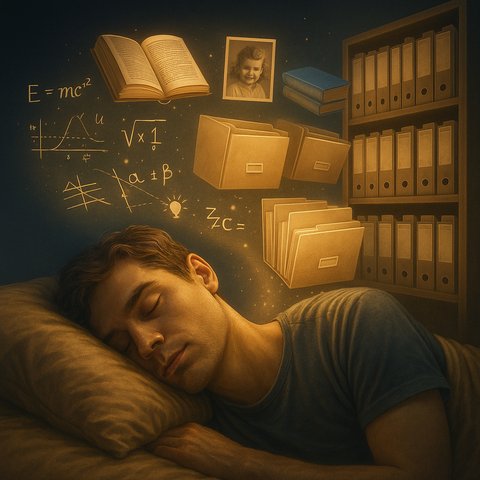
Sleep also plays a key role in learning and memory formation. Information received during the day is sorted during sleep. Some of it is moved into long-term storage, some into an archive, and some is discarded. After a good night’s sleep, material that seemed impossible to memorize the day before may suddenly be much easier to recall. It is no coincidence that students who try to “review everything late at night” often remember less effectively than those who simply go to bed on time.
Teenagers deserve special attention. Many adults tend to interpret morning grumbling and the desire to sleep “five more minutes” as laziness or being spoiled. Research suggests otherwise. During adolescence, biological rhythms really do shift: activity may peak later in the evening, while the body needs more time in the morning to become fully alert. This is not simply teenage rebellion; it is real biology. That is why some countries and school systems have begun moving school start times later, often with positive results.
Looking back, it becomes clear how much science has contributed to our understanding of sleep. Thanks to the work of Nathaniel Kleitman and his student William C. Dement, we learned much more about sleep stages and their cycling. Dement was among the pioneers who linked REM sleep with dreaming and helped establish sleep medicine as a clinical field. More recently, the scientist Matthew Walker has popularized sleep research through books for a general audience and helped many people reconsider the habit of treating sleep as something that can be squeezed into whatever time is left. His basic message is simple: sleep is not something you can remove from your schedule without consequences.
Speaking of schedules, ideas periodically appear suggesting that people can learn to sleep less — four hours a day or even less. Exotic systems are proposed: sleeping for twenty minutes every four hours, dividing the night into segments, or relying on “microsleeps”. All of this sounds tempting, especially if you constantly feel short of time and as if there are not enough hours for life itself. But research suggests the opposite: for most people, these experiments lead to poorer cognitive performance, worse mood, and health problems. Sleep is not a flexible resource that can be cut indefinitely without cost. It is the foundation on which everything else rests.
Today, science increasingly treats sleep not as a pause between important activities, but as an important part of active life itself — a period in which key biological processes take place, without which we cannot maintain clear thinking, psychological stability, health, or simply a sense of well-being. Sleep is not an escape from reality. It is a way to restore ourselves so that we can live fully — both now and in the long term.