



Meow
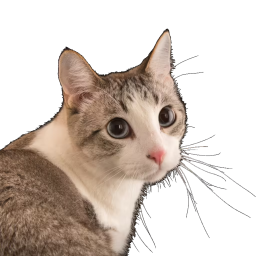
Sometimes, both in everyday life and in psychological practice, we notice similarities between our own character, habits, worldview, and those we associate with a particular animal. The roots of this go back to the ancient human tendency to animate the living and non-living world around us.
Since the time of Ancient Egypt, and even earlier, the cat has been perceived as a mystical creature. In Ancient Egypt, the cat was one of the symbols of the goddess Bast, who herself was often depicted in the form of a black, fluffy animal.
In the beliefs and traditions of Slavic peoples and the peoples of Southern Siberia, cats were also attributed remarkable mystical qualities.
The image and character of the cat are most often marked by duality. On the one hand, it protects people from dark forces, can remove a curse, or protect people and the home in which it lives from various misfortunes.
In the cultures of many peoples, the cat, as a protector, is the first to cross the threshold of a new home or the first to be placed in a cradle before a baby, thus cleansing the space for a new, peaceful, and joyful life.
The cat is perceived as a wonderful healer, not only of the body but also of the soul: it is believed to help a person, especially someone it has chosen as “its own,” relieve various kinds of pain, such as headaches, neuralgic pain, and certain spasms, by taking on some of the negative energy.
The cat is willful and independent and prefers to live and act at dusk or at night. For this reason, in mystical traditions and beliefs it is often associated with another or otherworldly realm, witchcraft, and a kind of secret knowledge available only to the chosen few. In shamanic traditions, the cat is one of the guiding spirits that assist in shamanic rituals. And, of course, it is widely known that the cat is one of witches’ favorite animals, often serving as their symbol and even as a protective charm.
Because of their independent nature, cats are believed to demand respectful treatment, and in myths and legends they are often endowed with the power to curse or seriously spoil the life of a person who has harmed them, especially deliberately.
This animal is a predator and a hunter, and once again, a nocturnal one. Therefore, it is worth remembering that the cat carries an element of danger, even if only a small one. Like many predators, cats also possess excellent eyesight and hearing, patience, and speed, which help them track and catch prey. So when we speak of the cat as a symbolic animal—for example, one that appears in a person’s self-description or in a drawing of a personal coat of arms—these characteristics should also be taken into account.
Cats are extremely intelligent and observant and often take the role of a quiet watcher in the home. Their owners know their habit of choosing a place from which they can observe most of their territory: in this sense, the cat symbolizes the desire to know what is going on and to “keep a finger on the pulse.”
In terms of physical control, these animals have truly remarkable coordination and flexibility and are associated with gracefulness and silence. As a result, they symbolize agility, resourcefulness, and the ability to emerge with dignity from even the most difficult situations.