



Most of us are undoubtedly familiar with the phrase: “Time heals.” And often, that really is how things work. Even after very difficult experiences, we can gradually return to everyday life. The past cannot be changed, and memories may continue to resurface for a long time, but little by little the mind comes to terms with what has happened.
But this does not always happen. Sometimes we go through events so painful that simply accepting them, grieving the loss and carrying on with life as before feels impossible. In such moments, the mind may resort to surprisingly powerful ways of protecting us. We may unconsciously avoid painful memories and feelings, begin to perceive what happened differently, or even seem to lose touch with the part of ourselves that is inseparably connected with the tragedy we experienced.
The 2001 film K-PAX tells a story of just such an unusual situation. At first glance, it is a mysterious tale with elements of science fiction, yet it touches on very real phenomena encountered in psychology and psychotherapy.
What happens when we cannot come to terms with what has happened? Why does the mind sometimes retreat from reality rather than face it directly? And is what we call a mental disorder always simply an illness, or can it also be a protective mechanism—a desperate attempt by the mind to shield us from unbearable pain? Let us explore these questions through one of cinema’s most unusual psychological stories...
What Happened to Robert: The Tragedy That Changed His Life
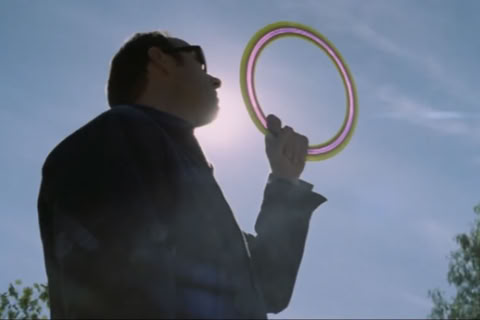
K-PAX is a 2001 American film directed by Iain Softley. The leading roles were played by Kevin Spacey (Kevin Spacey Fowler) and Jeff Bridges (Jeffrey Leon Bridges). With a substantial budget of around $68 million for a psychological science-fiction film, it earned roughly $65 million worldwide.
There are no grand Hollywood set pieces or an abundance of special effects. Most of the story unfolds through conversations between people. The most important dialogues take place between two of them—the psychiatric patient who calls himself Prot and his treating psychiatrist, Mark Powell.
Prot claims that he is not from Earth but has come from the planet K-PAX, located roughly a thousand light-years away. He speaks about this with complete confidence, as though he were simply describing obvious facts from his own biography. He knows when and why he arrived on Earth and when he is supposed to return home. He describes life on his planet in detail and never seems to doubt who he is. More than that, many of the people around him begin to believe him because he is extraordinarily convincing.
At first, the situation seems straightforward: we appear to be looking at a typical psychiatric patient with entirely fantastical ideas about his own origins. Yet Prot also turns out to have remarkable knowledge of astronomy, surprising even experts in certain areas. He reacts unusually to bright light, and medication has little of the expected effect on him. He communicates with the other patients so naturally that at times he seems able to help where trained doctors cannot.
All of this prompts Powell to investigate his patient’s past more seriously. He does not, of course, begin to believe the story about an alien from K-PAX, but there is clearly some earthly explanation hidden behind Prot’s behaviour.
Hypnosis sessions prove particularly useful. During them, very earthly details begin to appear in Prot’s stories: a small house, a family, a job at a slaughterhouse, and a place that might be located on a map. Gradually, Powell manages to connect these clues with a real person—Robert Porter, who once lived in a small town in New Mexico.
Robert had a wife, Sarah, and a young daughter, Rebecca. From what the doctor is able to discover, his life had been ordinary: he worked, lived with his family in their own home, and bore no resemblance to the mysterious visitor from another planet who would appear years later in a New York psychiatric hospital.
But everything changed abruptly on 27 July 1996. While Robert was at work, a criminal named Darryl Walker entered his home. He attacked Robert’s wife and killed both her and their daughter. Robert returned while Walker was still there. A struggle followed, during which Robert killed the intruder by breaking his neck. Afterwards, he went to a nearby river. His clothes were later found on the bank, but Robert himself—dead or alive—was never found. The people in the town assumed that he had drowned.
Later, Prot appears in New York—a man whose appearance matches Robert Porter’s exactly. He has a different story, a different home and a different life. He has come from a distant world a thousand light-years from Earth.
Until the very end, the film never allows us to say with certainty that Prot and Robert are the same person. It deliberately leaves in details that support the science-fiction interpretation. But for our purposes, that is not important, and we will not try to prove that there could never have been an alien from K-PAX.
What is more interesting for us is this. If we accept the psychological interpretation, Robert Porter disappears after the tragedy and an alien called Prot appears in his place. From that point on, the story of K-PAX becomes interesting not so much as science fiction, but from a psychological perspective. What can happen to our minds when an experience is simply too painful to accept? What lies behind such a response? Can we become so detached from our own past that our very sense of who we are changes along with it?
When Reality Becomes Unbearable
 In most cases, we gradually adapt even to very difficult situations. First comes shock, then pain, tears, sleepless nights and difficult memories. But nothing can change what has already happened, and the mind slowly adjusts to reality. We may never become exactly who we were before, but some sense of stability can eventually return.
There are, however, exceptional situations. Sometimes an experience is so overwhelming that there seems to be no ordinary way to “live through it and get used to it.” A kind of psychological distance may then appear between us and what has happened. We understand that yes, it really did happen, yet inwardly it may feel as though it happened to someone else. Individual episodes may be remembered almost from the outside. Sometimes feelings switch off altogether: we expect to feel horror, grief or fear, but instead there is only emptiness.
States like these are associated with manifestations of dissociation. The word is often linked with the idea of a “split personality,” but dissociation is actually much broader and can take many different forms.
For example, after a severe shock we may suddenly feel that everything around us is somehow unreal. People are talking, cars are moving, clocks are ticking, yet the world feels as though we are seeing it through glass or watching a scene in a film. Sometimes our own body begins to feel strange: our hands seem not quite our own, our voice sounds unfamiliar, and we watch our own actions almost like an outside observer.
It can happen in other ways too. Certain moments or events may simply fail to register clearly in memory. We know we were there and may be able to reconstruct the beginning and the end, but there are gaps in between. Or we may remember what happened perfectly well, yet emotionally it feels as though it happened to somebody else.
In milder forms, something similar is familiar to many of us even if we have never experienced serious trauma. After a sudden fright, we may act automatically and only later begin to realise what happened. During a difficult conversation, we may unexpectedly feel strangely calm, with the real emotional reaction arriving only hours or even days later.
A reaction like this does not in itself mean that we have a mental illness. Under intense stress, temporary emotional detachment from what is happening can reduce psychological overload. If an experience is too powerful, the mind may seem to turn down its volume for a while, helping us withstand something that would otherwise be extremely difficult to bear.
It can become a problem when that distance grows too great or lasts too long. If painful memories remain inaccessible for a long time, if we continually avoid everything connected with them, if our feelings remain switched off and our own life begins to feel like someone else’s, then the protection that once helped us survive an overload can begin to prevent us from returning to ordinary life.
It is important not to imagine the mind as an algorithmic processor that decides: “We will exclude this and simply refuse to remember it.” Such processes usually unfold outside conscious awareness. We do not deliberately choose to forget what happened, stop feeling, or experience reality as though it were a dream. We—or those around us—may notice that something in our perception has changed, while the reason for that change remains far from obvious.
Seen in this light, Prot’s story becomes especially interesting. If we set aside the film’s science-fiction interpretation for a moment, we can view him as an exceptionally vivid artistic image of extreme detachment from one’s own reality. He has not merely erased individual events from memory or fled from pain; it is as though he has stepped entirely outside the past in which that pain exists.
This also raises another intriguing question: why does the new identity take the form of Prot? Why not something more understandable and earthly—not simply another name or another past, but an alien, something far more difficult to believe?
And that brings us beyond dissociation itself to another question: what psychological meaning might this particular form of escape from oneself have carried?
Why the Mind Needed Prot
 If we view the story of K-PAX as a psychological metaphor, what becomes interesting is not simply the appearance of another identity, but the particular identity that emerges. Why Prot?
After all, to distance oneself from a painful past, it would be possible to imagine being someone else—another person with a different biography, a different family and an entirely earthly history. But Prot does not merely change his name or a few details of his life. It is as though he rejects his entire earthly biography.
Robert has a past. Prot has a completely different story. Robert has a home, a family and a place where the tragedy happened. Prot does not belong to Earth at all; he has arrived from another planet. Robert has memories that cannot be changed. Prot looks at everything around him from a distance, like an observer who is only here temporarily and will one day simply return home to his own world.
Psychologically, this is a fascinating contrast. If the problem lay in only one painful memory, it might be enough to distance oneself from that memory alone. But when even the simplest memories of one’s former life become destructive, mere distance is no longer enough. The most radical way to sever the connection with the past is then not simply to erase one or several events from memory, but to stop being the person to whom they happened.
In that sense, the image of an alien seems almost ideal. Prot does not have to remember Robert Porter’s family because it is not his family. He does not have to relive what happened in that house because it is not his house. Earthly rules do not carry the same weight for him—after all, he comes from an entirely different world.
It is important not to interpret Prot’s whole story as a deliberate fabrication. Psychological defence mechanisms rarely work by consciously choosing a carefully thought-out solution. We do not wake up one morning thinking, “I want to forget everything that hurts me,” or “from now on, I refuse to feel pain.” Many protective reactions arise unconsciously, without requiring us to understand what is happening.
Sometimes we begin to justify our own actions because admitting a mistake is too painful. In other situations, we persuade ourselves that a loss was not really so significant. Sometimes we redirect our anger away from the person who caused it and towards someone easier to reach. These reactions are very different, but they share one feature: the mind is trying to relieve, or at least reduce, internal tension.
That is why it would be misleading to say that Robert simply “invented” Prot one day and created a new biography for himself. It is more accurate to view Prot’s position as the result of unconscious protective processes that emerged after the trauma.
It is also revealing to look at what Prot himself is like. He is calm in situations where Robert would presumably be overwhelmed by powerful emotions. He is barely attached to ordinary earthly values. The thought of death does not frighten him in the way it frightens most of us. He speaks about life with ease and observes the people around him from a certain distance. Prot, then, is not simply “another Robert.” He seems almost to embody the very qualities that make it possible not to come into contact with what made Robert’s former life unbearable.
We might even say that K-PAX in this story is less a different planet than a symbol of absolute distance. We cannot escape a painful past by moving to the next town—our memories travel with us. Changing a name is not enough—the biography remains the same. But if we imagine that we belong to another world altogether, the connection with the past can be broken completely.
In this sense, the film’s science-fiction plot becomes a remarkably precise psychological metaphor. Sometimes, in order to protect us from a painful reality, the mind may need more than a slight adjustment in how we interpret what is happening. It may need a far more elaborate construction—one capable of separating the present self from the part of the past that causes unbearable pain.
In this interpretation, Prot is neither a random image nor simply an impressive invention by the screenwriters. He becomes almost the complete opposite of Robert Porter, entirely free from Robert’s past.
But this introduces another important nuance. If such a psychological construction really did allow Robert to continue living somehow after what he had endured, should we see it only as an illness that must be removed? Or could it also be a useful response—something Robert’s organism resorted to in order to avoid even more destructive consequences? Let us think about that further...
Salvation or Illness: What the Mind Is Really Protecting
 We usually think of a psychological symptom as something we should get rid of as quickly as possible. If intrusive memories torment us, we want them to stop. If we avoid certain places or conversations, it may seem that we simply need to force ourselves not to. If our perception of reality begins to change, we may feel that everything must be restored to the way it was before.
But it is worth asking another question: why did this symptom appear in the first place? Some psychological reactions do not arise by accident. Under certain circumstances, they may serve a protective function: reducing internal tension, distancing us from experiences that are too painful and helping us survive the most difficult period after what has happened.
We can see this even in ordinary life. One example is emotional numbness. After a devastating loss, someone may focus entirely on practical arrangements and appear from the outside to feel nothing at all. That can seem strange: where does such calmness come from? But powerful emotions may arrive later, once the first shock begins to subside. At the beginning, this kind of emotional “freezing” may allow us to do what is important and necessary.
Another example is avoidance. If something truly frightening has happened to us, it can be natural for a while to stay away from the place connected with it, avoid certain details from the past, or become frightened by anything that reminds us of the event. In the long term, constant avoidance can seriously restrict everyday life. At first, however, it may help reduce the psychological overload, even if only a little.
For this reason, it makes little sense to divide psychological defences into simply good and bad. What helps us cope today may become a problem tomorrow. At first, a defence allows us to endure what is happening; later, it can gradually turn into a barrier that prevents us from moving forward. We become accustomed to avoiding everything painful, lose contact with our own feelings more and more, and make our world increasingly narrow. At some point, we may no longer be protecting ourselves only from pain—we may also begin to reject the world around us as it actually is.
From this perspective, Robert’s story takes on an unexpected meaning. He does not appear helpless. On the contrary, Prot talks, jokes, takes an interest in those around him, forms relationships and even helps other patients. He is far more engaged with his surroundings than we might imagine Robert Porter was immediately after the tragedy.
This becomes a particularly important metaphor at the end of the film. When Prot “leaves,” the old Robert does not reappear as someone who has remembered and understood everything, accepted his past as it is and returned to ordinary life. No. After Prot disappears, what remains is an almost motionless Robert, barely responsive to the world around him and moving in a wheelchair.
This raises an unsettling thought: what if Prot was not only a manifestation of a disorder, but also the very thing that allowed Robert to keep functioning at all? Would it perhaps have been better to preserve Robert’s new state as Prot rather than return him to a life he could no longer bear? If Prot communicates easily with others, can care for himself, remains interested in life and poses no danger to himself or anyone else, why should his condition be seen only as a problem? Given what he had endured, could this form of existence perhaps have been the best one available to him?
But there is an important boundary here. The fact that his state allows him to function does not make him healthy. The reverse is also true: the unusual nature of our experiences does not automatically mean that they must immediately be “treated.” In psychology and psychiatry, what matters is not only how far our perception differs from what is considered ordinary, but also how well we are able to live, make decisions, maintain relationships, care for ourselves and remain connected with the reality around us.
So in Robert’s case, perhaps the question should not be, “How do we make him stop being Prot?” A better question might be: what will happen to Robert if Prot disappears? The ending of the film offers a rather frightening answer. Prot disappears, but Robert does not recover. On the contrary, what remains is someone almost entirely withdrawn from the life around him. The disappearance of an unusual psychological defence, in other words, does not in itself mean that the patient has returned.
This brings us to an important idea. What if helping Robert would have meant not removing the protection he had built, but first creating something capable of replacing it? If the only support is taken away before other supports exist, could his condition become much worse?
Modern psychotherapy does not require a therapist to support every belief a patient holds or agree with every version of reality. But abruptly trying to “expose” a defence, prove that it is detached from reality and therefore simply wrong, can also make a patient’s condition worse.
Perhaps the goal should be different: gradually helping us become able to live with a reality that can no longer be changed. Building new internal and external supports, and learning to tolerate memories and feelings that once seemed unbearable. Then a defence that once became the only possible form of survival may gradually lose its purpose and no longer be needed.