



We all have moments when everything is decided here and now. An exam, a sports competition, an important presentation, or a performance — sometimes the outcome depends on just a few minutes, or even seconds. It would seem that everything is ready: we have studied for a long time, trained hard, and carefully rehearsed everything. But at the decisive moment, anxiety can take over, while the body and thoughts seem to slip out of our control.
Why does this happen? Why do we lose our composure precisely when we need it most? And can we learn to stay in control so that fear does not prevent us from showing what we are truly capable of?
We have already looked at why anxiety arises during exam preparation and what helps us cope with it. We have also discussed the fear of public speaking and how to learn to feel confident on stage. But in this article, we will look at a special layer of experience that appears precisely at the moment of the event itself. This is the state in which there is no more time to prepare, and much depends on whether we can preserve clarity and composure here and now. This psychology of the decisive moment is exactly what we will discuss next.
Why We Lose Our Composure at the Most Important Moment
 At first glance, it seems logical: the more important the moment, the more strength we should mobilize. But the paradox is that it is precisely at such moments that we often lose control. This is called the paradox of effort: the harder a person tries to “pull themselves together,” the more tension they create for themselves.
Try to remember a situation when you told yourself: “just don’t forget the words,” “the main thing is not to miss,” “hold on, pull yourself together.” It would seem that this should support us at the decisive moment. But instead, the brain begins to fixate on the prohibition itself rather than on the task. Instead of answering the exam question, the empty phrase “don’t forget” keeps circling in your head. Instead of making an accurate kick at the ball, you think only “just don’t miss.” And then something that used to work automatically suddenly stops working altogether.
Why does this happen? Let us list several factors:
- The importance of the event increases the fear of making a mistake. When the result is something others will notice — a grade, a medal, applause — an ancient fear of being ridiculed or rejected comes into play. For the psyche, this can feel like a threat to survival.
- Attention shifts inward. Instead of focusing fully on the moment, we begin observing ourselves: “How will I look?”, “Is my voice trembling and showing my weakness?”, “What if I make a mistake now — what then?” This excessive self-monitoring blocks natural action.
- The inner critic comes alive. A voice starts sounding in our head, treacherously announcing: “You prepared badly,” “You are going to embarrass yourself,” “Everyone around you is just waiting for you to fail.” And the harder we try to silence it, the louder it becomes.
- Automatic skills break down under excessive control. Things we have done dozens of times “on autopilot” — an athlete’s movement, a memorized text, a familiar answer — suddenly come under too much scrutiny and pressure. Imagine trying to consciously control every step while walking: you would immediately begin to stumble and fail to make each movement in time. Or imagine starting to control your breathing, something you have always done subconsciously. The same thing happens here.
The more important the moment and the higher the expectations — our own or other people’s — the more dangerous this trap becomes. And most frustratingly, the harder we try to force ourselves to be “perfect,” the greater the chance of losing our composure at precisely the moment when we need it most.
Although the situations may look completely different from the outside — a school exam, a sports final, or stepping onto a stage — the internal mechanisms are the same. It is always a public test: there are observers, there is a possible result, and there is a feeling that too much depends on this moment. Different circumstances, different people, but the pattern is the same. The body reacts to an examiner, the stands, or an auditorium as if they were a real threat, and at that moment our biology begins to interfere with our ability to show what we actually know and can do.
What Happens to Our Body at the Decisive Moment
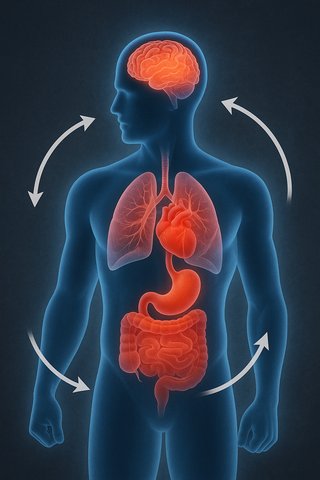 Many people know this feeling: you are sitting in an exam room, waiting for your turn or already looking the examiner in the eye, and suddenly strange things start happening to your body. Your heart is pounding as if you had just run a marathon, your palms become sweaty, your mouth goes dry, and your thoughts become confused. Sometimes it seems that you are about to forget even your own name.
What is this state? Where did something that was not there before come from? Why does everything suddenly begin to slip out of control? In fact, it can all be explained by basic biology. Our body is designed to automatically switch into a protective mode when it senses danger — the so-called “fight or flight” response. In ancient times, this helped humans survive encounters with predators. Today the danger is much more peaceful — an examiner, a judge, or an audience — but the brain reacts in exactly the same way, as if a tiger had suddenly appeared in front of us in an open field.
Adrenaline and cortisol are released into the bloodstream. Then a whole cascade of changes begins:
- Heart. It starts working at full capacity to pump blood faster. Blood pressure rises, the face may flush, and the ears may “burn.” Sometimes, on the contrary, the skin turns pale because blood is redirected from the surface of the body toward the muscles.
- Lungs. Breathing becomes rapid and shallow. This is normal when running or fighting, but it seriously interferes with calm thinking and speaking. That is why many students or athletes complain that they “cannot get enough air,” even though there seems to be no physical exertion.
- Digestive system. It slows sharply: the body has no time for digesting food when it believes it needs to escape. That is why a lump in the throat, nausea, or rumbling in the stomach can appear.
- Muscles. They tense up, ready for sudden movement. In some people, this causes trembling — the familiar shaking in the hands or knees before a performance.
- Eyes and ears. The senses become hypersensitive. Vision seems to narrow into a tunnel, and sounds seem louder. A person sees and hears everything too sharply, while at the same time losing the overall picture of what is happening and becoming less connected with the surroundings as a whole.
- Brain. This is where the main battle unfolds. The emotional center, the amygdala, cries: “Danger! Danger!” It takes over, while the prefrontal cortex, responsible for logic, memory, and speech, seems to move into the background. That is why we suddenly forget what we studied for weeks or begin speaking in a confused, disorganized way.
Interestingly, this reaction appears in much the same way in everyone: whether you are a school student taking an oral exam, a musician facing an audience, or an athlete preparing for a decisive shot. Our bodies react similarly because, to them, the event appears to be a potential threat to our survival.
At such moments, it can feel as though the body is “betraying” us: instead of helping us concentrate, it prepares us to run away. But this is not a mistake of nature; it is the work of an inbuilt protective mechanism. The problem is simply that in the modern world we do not need to run away from an examiner or attack a judge. At the very least, that is against the rules, and at worst it could seriously complicate the rest of our lives. We need to speak, reason, and demonstrate our abilities. And this is precisely where the conflict begins between our biology and the goals we are trying to achieve.
How to Help Yourself Before the Decisive Moment
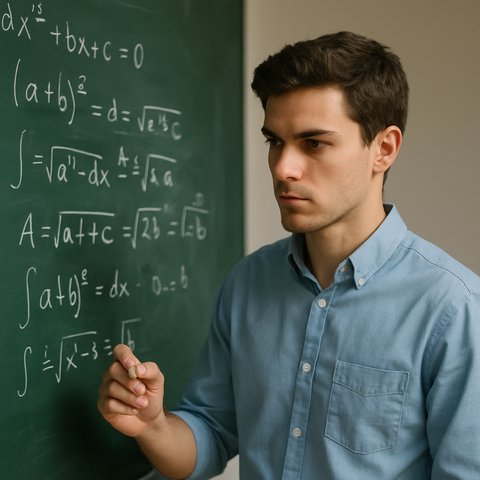 It is impossible to get rid of anxiety completely. Nor is that necessary — it is part of us, and to some extent it can even provide extra energy. What matters is something else: learning to regain control in the moment when it feels as though anxiety is simply overwhelming you.
The first thing you can use is breathing. It sounds very basic, but despite its apparent simplicity, it really can work. Try it: one deep breath in, then a slow breath out. Repeat once more. And again. Gradually, the heart begins to adjust to this rhythm, as though receiving the message: “there is no danger, you can relax.” A few minutes of this kind of breathing can restore clarity when only a few seconds earlier it felt as though panic had no limits.
The second is the ability to shift your attention. When we focus on the result — “what if it doesn’t work out,” “what will they think of me,” “how will it look from the outside” — anxiety only grows. But if we shift the focus to the process itself, things can change quite easily. An athlete starts thinking about how to place a foot correctly on the track, a student about how to begin an answer and immediately establish a good connection with the examiner, a speaker about someone in the first few rows to whom they are telling a story or giving information. A small shift in attention from “what will happen afterward” to “what am I doing right now” can noticeably reduce tension and restore naturalness.
There is another technique that helps many people — small “anchors”. For actors, these are almost rituals: adjusting a costume, taking a deep breath before going on stage. For athletes, they are familiar movements: shaking out the hands, bouncing or touching the ball to the ground. For students, it may be a short thought such as “I’m ready” or “I can do this,” or even putting a coin in a shoe. These anchors often work as a point of support: while I perform this movement or repeat this phrase, I feel that I am in a familiar and safe situation, which means everything is under control, just as usual.
All these methods share one idea: anxiety does not need to be defeated. It cannot simply be “switched off.” But its energy can be used and effectively built into the action you are performing. Then trembling hands turn into concentration, rapid breathing into greater vocal power, and anxiety as a whole becomes not an enemy but fuel that helps you show your best.