



Some subjects frighten us and attract us at the same time. Maniacs, serial killers, psychopaths... They seem to come from another, darker world where different rules apply. We read articles, watch films and documentaries, wondering: how can someone lead an ordinary life — go to work, smile at the neighbors — and then kill in cold blood? What is going on inside their head? Why did they become this way?
Our interest in this is not merely idle curiosity. In a sense, it is an attempt to reassure ourselves: if we understand why someone became a monster, perhaps we can find a way to prevent new tragedies. Or maybe it is even simpler — we are simply afraid of the unknown. And that is precisely why we want to look inside.
No, this article will not contain details of horrific crimes — it will focus on what lies behind them: psychology. We will talk about how maniacs are formed, what happens in their brains, and what kind of childhood most often lies behind merciless cruelty. We will try to understand — without excusing, but with attention.
Because understanding does not mean forgiving. It means arming ourselves with knowledge and being able to use it when necessary!
Who Are Maniacs in Psychological Terms
 In everyday speech, the word “maniac” has become an almost universal bogeyman. Hear somewhere that there is a “maniac in the park,” and a terrifying image immediately appears in your head: a night-time killer, wild eyes, an axe in hand. But in psychology, things are a little more precise.
A maniac is not a diagnosis! It is, rather, a colloquial term for a person who commits violent crimes with a certain regularity and internal motivation. Most often, this means serial killers — people who kill not spontaneously, but deliberately, with intervals between crimes, and gain some kind of psychological “reward” from it. This may be power, arousal, control, or even a sense of “mission.”
Psychologists identify several recurring traits that are often found in such people:
- Emotional coldness. They may smile and be polite, but they do not feel another person’s pain. This is not “cruelty out of anger,” but rather a lack of empathy.
- A double life. Many serial killers do not look suspicious. They may have a family and a job, and neighbors know them as “normal.” They may even enjoy being inconspicuous.
- Manipulativeness and control. It is important to them to control others — whether victims, investigators, or even the media.
Here it is important to distinguish between two personality types that are often discussed:
Psychopaths are people with innate brain characteristics, especially in areas responsible for emotions and self-control. Psychopaths are cold-blooded, deliberate, calculating. They may be charming, but they do not feel guilt. Example: Ted Bundy — he graduated from university, charmed women, represented himself in court... and at the same time killed in cold blood, leaving dozens of bodies behind.
Sociopaths are usually the result of harsh upbringing and trauma. Sociopaths are prone to outbursts of aggression, have poorer self-control, and lead more chaotic lives. They may have problems with work, addictions, and impulsivity.
But there is something they have in common: neither feels guilty. They lack an internal “braking system” — the one that prevents most of us from crossing the line.
You may also hear another term — mass murderers. Unlike serial killers, they commit their crimes all at once, in one place (for example, an attack at a school or shopping center). The motivation and psychology are often different there — more often resentment, a desire for revenge, or demonstrativeness.
Serial killers are different. They act predatively, gradually, as if following an internal script. Their crimes often become rituals, and they themselves are not broken people, but distorted ones.
A Childhood That Leaves Scars
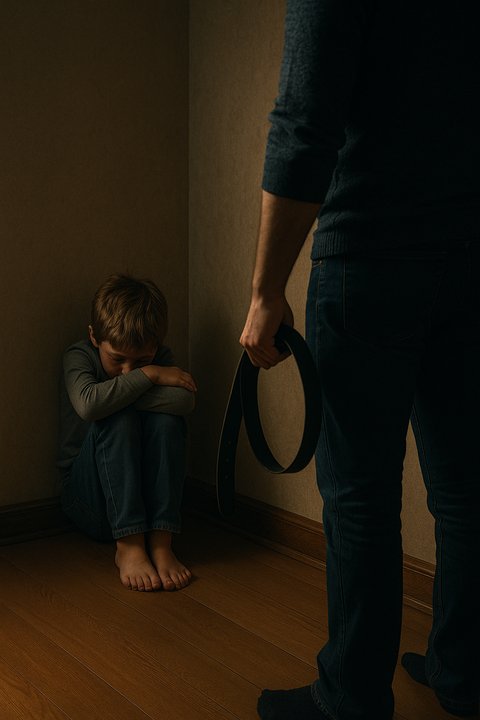 Monsters are not born. Almost every serial killer has a story that begins long before the first crime. Back in childhood. It is then, while personality is forming, that the world first shows what it can be like — warm and reliable or cruel and indifferent. And, as banal as it may sound, very often it all begins with a simple fact that is almost invisible at first glance: nobody loved the child.
Psychologists have repeatedly noted that behind the outward coldness and cruelty of killers there is often chaos in their early lives. A traumatic childhood is an almost constant companion in the biographies of maniacs. Violence in the family, parental indifference, humiliation, constant fear, or a sense of being unwanted — all this wears away at the psyche drop by drop. Where an ordinary child develops trust in the world, they develop anger, suspicion, and inner alienation. Some grow up feeling that they are a mistake, that life is pain, and that other people are a source of threat. And when too much rage and pain accumulates inside, one day it finds a way out.
A cruel father who beat them for every mistake. A mother who never hugged them once. Silence in the room when all they want is for someone to come in and say, “I’m here.” All this does not necessarily leave marks on the body, but almost always leaves them on the soul. A child who is ignored begins to believe that they do not matter. And when nobody teaches them how to control anger or process hurt, inner pain begins to take on a life of its own.
Some of these children begin torturing animals, setting fires, destroying things. It used to be believed that the so-called “Macdonald triad” — cruelty to animals, pyromania, and bed-wetting at an older age — was an indicator of future violence. Today this theory is treated with caution, but many criminals really did display such early behaviors. It is not a sentence, but it is a warning sign that often goes unnoticed.
The biography of Andrei Chikatilo illustrates this path especially vividly. His childhood was bleak: poverty, hunger, humiliation, rumors that his older brother had been eaten during the famine years. He had problems with physical development, constant fear of his father, and a sense of inadequacy. He was bullied, suffered from bed-wetting, and had no success with women. Over time, all this developed into a distorted, sadistic need for control and power, an attempt to compensate for feelings of helplessness through violence.
But it is important to remember: not everyone who has lived through a terrible childhood becomes a killer. Many go through similar hell and, on the contrary, become more sensitive and compassionate. The difference often lies in the details: Was there support from at least one adult? Was there a chance to develop empathy? Was the child able to express pain rather than bury it inside?
Nevertheless, in the biographies of those who ultimately took the dark path, the same theme appears again and again — a childhood without love. Where someone should have been there, there was emptiness. Where the soul cried out, nobody came. And that cry, once silenced, may one day burst out in the most monstrous form.
What Happens in the Brain of a Maniac
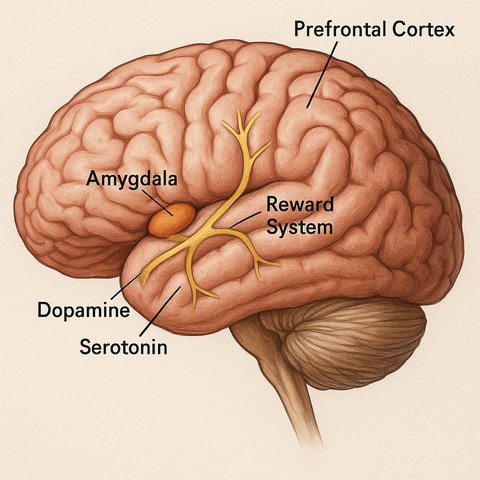 We can talk as much as we like about character, childhood trauma, and cruel parents — but sooner or later the conversation comes down to one thing: how the brain works. Or, more precisely, how it does not work in those who prove capable of the most terrible crimes. At first glance, the brain of a maniac does not differ from that of an ordinary person. The same folds, the same billions of neurons, the same areas responsible for speech, emotions, and self-control. But look deeper — with MRI, behavioral experiments, neuropsychological tests — and frightening differences begin to emerge.
One of the key areas of the brain that most often shows abnormalities in serial killers is the prefrontal cortex. It is responsible for self-control, the ability to restrain aggression, and moral judgments. It is a kind of internal brake, without which a person stops feeling where the line lies between acceptable and unacceptable. If, in a critical moment, an ordinary person’s inner “brake pedal” activates and a voice says, “Stop, you are hurting someone,” then in a psychopath this voice is either very quiet or does not sound at all. And then only the impulse remains: I want it — I take it, I’m angry — I hit, it annoys me — I destroy it.
But the problem is not only the absence of brakes. Many maniacs show changes in the functioning of the amygdala — an area associated with the formation of fear and empathy. Normally, when a person sees someone else suffering, something tightens inside — empathy appears, anxiety, a desire to help. In some psychopaths, the amygdala essentially remains silent. They can watch suffering and feel absolutely nothing. Worse, in some of them, another person’s pain causes not disgust but interest. And sometimes arousal. It sounds horrifying, but this is not fiction — these are facts recorded by medicine.
There is another component that often works “inside out” in such people — the dopamine reward system. In most of us, it activates when we achieve a goal, receive recognition, or fall in love. In maniacs — after violence. What should cause disgust is, on the contrary, associated with pleasure. It is like a fault in an electrical circuit: the “good” signal arrives in response to destruction. With each new victim, they strive for a stronger sensation, greater control, a brighter “reward” response.
Perhaps one of the most striking cases is associated with American neuropsychologist James Fallon. While studying the brains of criminals, he unexpectedly discovered that one of the scans — showing signs of severe psychopathy — belonged to him. He was neither a murderer nor a rapist. But by his own admission, he often behaved selfishly and manipulatively in life and did not feel strong attachment. What saved him? A warm, supportive family. This case vividly shows that biology is not a sentence. It may be the background, but not the script. Environment matters. And choice does too.
Does all this mean that maniacs are simply sick people who bear no responsibility for their actions? Not at all. Many of them do not suffer from psychosis, do not lose touch with reality, and do not hear voices. Their thinking is cold-blooded and calculating. They are not classic “madmen,” but emotionally empty, morally powerless people whose brains work differently — without the human brakes on which society depends.
Understanding biology does not absolve guilt. But it provides a key to the question that torments everyone who encounters such evil: how can a person look, speak, and move like us — and at the same time be capable of what seems unthinkable?
Motivation and Behavior: How and Why Maniacs Kill
 An ordinary person, even when angry, is unlikely to seriously think: “Why don’t I kill someone?” And if such a thought flashes through the mind, it will remain somewhere in the realm of fantasy. Serial killers are different. For them, murder is not an outburst or an impulse, but part of an internal script that may mature for years. Murder becomes almost a ritual. And there is almost always a clear motivation behind this script.
Psychologists have tried to classify maniacs according to the reasons that drive them. The divisions are not always clear-cut, but they make it possible to get at least a little closer to understanding.
Some consider themselves chosen. These are the so-called visionaries — they act under the influence of hallucinations and delusional ideas, believing that they hear the voice of God or a demon ordering them to “cleanse the world.” One example is David Berkowitz, the “Son of Sam,” who claimed that a neighbor’s dog was possessed by a demon and gave him orders.
There are others — missionaries. They kill not at the command of voices, but from an inner “duty”: to cleanse society of “filth.” Prostitutes, homeless people, members of certain groups — in their eyes, the victims are not people, but symbols of “evil.” This is how Yuri Ustimenko, a Russian killer who called himself a fighter against moral degradation, thought.
There is a much more frightening category: hedonists. They kill for pleasure. Some are aroused by the victim’s pain, some enjoy fear, some collect “trophies.” Jeffrey Dahmer, for example, killed men, dismembered them, kept body parts, and took photographs. His goal was not simply murder — he wanted these people to remain with him forever, so that nobody would leave him.
Others seek not pleasure but power. It is important for them to feel absolute control over another person. They may stage a performance, pretend to be injured or helpless, just to get hold of a victim. Ted Bundy acted exactly this way — charming, intelligent, outwardly safe, he lured victims and then turned into an executioner.
Another important distinction is the degree of organization. Organized maniacs think everything through in detail: the plan, transportation, concealment. They are often socially adapted and intelligent. Bundy was one of them. Disorganized killers are the opposite. They act chaotically and impulsively, may leave evidence and fail to hide bodies. They often suffer from mental disorders and live in isolation. One example is Richard Chase, who drank the blood of his victims.
There are also those who simply... cannot stop. They begin for one reason, but then murder turns into an addiction. They need more and more: more fear, pain, power. And the stakes here are not money — but human lives.
But there are opposite stories too. Stories of victims who managed to survive. And often — thanks to unconventional behavior. A maniac, as a rule, acts according to a script. If that script is broken, things stop going according to plan, and the victim gets a chance.
Lisa McVey, abducted at 17 by Bobby Joe Long, began talking to him as a human being. She called him by name and said she understood that he was in pain. He let her go. She survived — and later helped get him arrested.
In the United States, a woman abducted on a highway suggested that her kidnapper go get something to eat with her. They ate a burger and talked. Half an hour later, he released her without explaining why. It later turned out that he had been on the verge of suicide, and her involvement disarmed him.
Kara Robinson, abducted by serial killer Richard Evonitz, acted submissive. She did not resist, but remembered everything: smells, numbers, furniture. As soon as an opportunity appeared, she escaped and told police everything down to the smallest detail. They found him.
Another woman convinced a maniac that she liked him. She promised to meet him again. He let her go — and the next day he was arrested.
It is important to understand: these are not tips or universal recipes. What helped one person may not work with another. But one thing is clear — if the attacker’s habitual script is disrupted, a window may appear in which there is a chance to fight for survival. Sometimes survival is not only about physical strength. It is the ability to speak. To look into someone’s eyes. To find calm inside yourself when everything is screaming with fear.
Serial killers are not merely characters from crime reports or scary stories told at night. Behind each of them is a complex history in which trauma, biology, distorted perception, and broken human connections are intertwined. Understanding these mechanisms does not justify evil, but it makes it less mysterious and therefore more manageable. To protect ourselves and others, it is important not only to be afraid, but also to look deeper — to where the darkest manifestations of the human psyche are born. Only by understanding how this works can we truly resist it.