



Psychology can play a role in practices involving attempts to contact the spirits of the dead, although this is not a primary field of psychology. Here are several ways psychology may be related to such practices:
- Psychological states: People who take part in séances or attempts to contact spirits may experience strong emotions such as grief, longing, or fear. Psychology studies how these emotions influence behavior and perception.
- Group dynamics: Such sessions often involve groups of people. Psychology examines how a group can influence individual actions and perceptions, creating a shared sense or belief that what is happening is real.
- Cognitive biases: Participants may interpret events through the lens of their expectations and beliefs, which can lead to cognitive distortions. For example, they may interpret random sounds or movements as signs from spirits.
- Study of beliefs and practices: Psychology can also examine how and why people believe communication with spirits is possible, including the cultural and social factors that influence these beliefs.
Thus, although contacting spirits is not a strictly scientific process, psychological perspectives can help explain why people take part in such practices and how they may affect their mental state.
Psychological States During Attempts to Contact Spirits
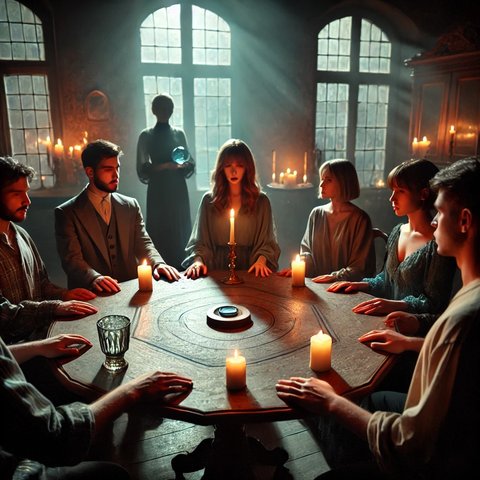 The psychological states that may arise when people take part in séances or attempts to contact spirits are varied and can be shaped by many factors, including emotions, cognitive processes, and even physiological reactions. Here is a closer look at some of them:
Grief and longing for deceased loved ones
For many people, séances are a way to seek comfort after the loss of a loved one. Longing and unresolved grief may lead them to look for a connection with the deceased. In such cases, the emotional experience may include:
- Grief: The desire to feel the presence of a deceased loved one and receive an answer or reassurance that they are “all right” can be a powerful motivation for taking part in such practices.
- Hope for comfort: Participants may expect communication with spirits to bring them reassurance and the sense that deceased loved ones continue to exist in some form.
Fear and anxiety
For some people, attempts to contact spirits involve an element of fear. This may be fear of the unknown or concerns rooted in religious or cultural beliefs. In such cases, participants may experience:
- Anxiety and worry: An expectation that unpredictable or even dangerous events might occur during an attempt to contact spirits.
- Fear of the supernatural: Many people perceive phenomena associated with spirits as supernatural and potentially threatening.
Preserving memory and searching for meaning
For people who have experienced a significant loss, a séance may be an attempt to preserve the memory of the deceased and find meaning in their death. This may also be connected with:
- A need for meaning: Participants may hope to receive an answer or understanding that helps them make sense of death and give it some meaning.
- A search for control: In some cases, people may try to control the process of communicating with spirits in order to regain a sense of control over the situation and their own emotional state.
Emotional dependence and belief
Sometimes participation in séances may be connected with deeper psychological and emotional states, such as:
- Emotional dependence on spirits: People experiencing difficulties in life may become dependent on belief in supernatural forces or spirits, which can provide temporary relief or support.
- Developing belief in the paranormal: Sometimes people begin to believe in spirits because they seek to explain their experiences or doubts through external, unknowable forces.
Cognitive distortions
During attempts to contact spirits, people may experience cognitive distortions such as:
- Apophenia: This is the tendency to perceive patterns and connections where none actually exist. For example, participants may interpret certain sounds or movements of objects as messages from spirits.
- Cognitive dissonance: When a person encounters contradictions between their view of the world and ideas about life after death, this may create inner conflict. Attempting to contact spirits can become a way of resolving this conflict and reinforcing belief in the paranormal.
Group pressure and influence
In a group taking part in a séance, an effect of group dynamics may arise and intensify participants’ psychological experiences. People may feel that they should believe what is happening because others in the group believe it. Participants’ perceptions and beliefs may shift as each person tries to conform to the expectations of the others. Group séances are often accompanied by heightened imagination, in which one phenomenon may be perceived by all participants as real even if it is only a shared illusion.
Responses to hypnosis and suggestion
In some cases, séances may include elements of hypnosis or suggestion. This is particularly relevant to sessions with mediums, who may use techniques that increase participants’ suggestibility and create an impression of contact with spirits. People who are more susceptible to hypnosis or heightened suggestibility may experience stronger and more realistic sensations during such sessions.
Trance and altered states of consciousness
Some sessions may include elements of trance in which participants experience unusual sensations and perceive reality differently. Such states are often used in spiritual and meditative practices. Trance is an altered state of consciousness in which a person may perceive things and events differently, making it possible to “hear” or “see” things that are not present in reality.
The psychological states that may arise during attempts to contact spirits can vary greatly, from emotional pain and longing for the deceased to fear and hypnotic trance. It is important to consider that such practices can trigger strong emotional reactions and affect participants’ mental state, which makes them a subject of interest for psychology.
Why Belief in Communicating with Spirits Remains Relevant
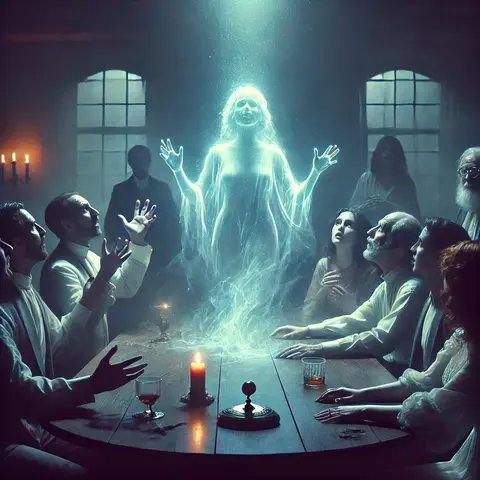 Belief in the possibility of communicating with spirits exists in many cultures and religious systems and has deep psychological and cultural roots. People may believe in spirits and in the possibility of communicating with them for various reasons, including emotional, cognitive, and sociocultural factors. Let us look more closely at some reasons that may contribute to this belief, even if some of them repeat points discussed above:
1. Psychological need for connection with deceased loved ones
One of the strongest motivations for belief in communication with spirits is the need for connection with deceased loved ones. Grief and loss can be so painful that a person looks for ways to restore the lost connection. People may feel that communicating with spirits is a way to:
- Receive comfort and reassurance that a deceased loved one is still with them in some form.
- Find answers to important questions about life and death.
- Cope with the emotional emptiness and grief felt after a loss.
Grief after the death of a loved one may encourage a search for connection with the deceased. In some cases, a person may even begin to feel that the deceased loved one is “still with them,” and this belief may ease suffering.
2. Cognitive distortions and belief in the supernatural
Cognitive distortions play an important role in how people perceive reality and interpret events. One such phenomenon is apophenia — the tendency to perceive patterns or connections in random events. For example, when a person senses the presence of someone who has died or hears random noises, they may interpret them as messages from spirits. This may happen because:
- When a person is experiencing emotional pain, they may begin to perceive ordinary events — noises, moving objects, and so on — as something supernatural that confirms their belief.
- Belief in the possibility of communicating with spirits can give a person an illusion of control over what happens after death, helping them cope with uncertainty and anxiety.
3. Desire to find meaning in death
People often seek meaning in what happens after death in order to cope with the uncertainty surrounding it. Many cultures and religions offer ideas about an afterlife or the continued existence of a spirit after death, making such concepts more compelling to believers.
Belief in spirits and communication with them may serve as an explanation of death, especially when a person fears or cannot accept the idea that death is the end. Belief in an afterlife or in the continuation of personal identity after death can create confidence that death is not the end.
Hope for continued existence may be connected with an attempt to affirm the idea that values, identity, and love continue after physical death.
4. Social influence and culture
Belief in spirits is often supported and reinforced through social influence and cultural traditions. In some cultures, communication with spirits or mediumistic practice is part of the social fabric, which can reinforce such beliefs.
Some religions and cultures have rituals and practices associated with communication with spirits, such as spiritualism or shamanism. These practices may strengthen belief in the supernatural and normalize communication with spirits as an ordinary part of life.
If belief in spirits is widespread in a society or a particular group, this may place social pressure on an individual and encourage them to share those beliefs.
5. The phenomenon of “unfinished business”
Sometimes belief in communication with spirits may be supported by the idea that the dead cannot rest until unfinished matters have been resolved. This is often described as the “unfinished business” phenomenon. People who experience intense emotional distress or remain burdened by guilt may seek communication with spirits in order to obtain forgiveness or a sense of resolution. Belief that spirits continue to exist with unfinished business may encourage people to seek ways of contacting them and receiving answers.
6. Psychological need for certainty
Death is one of the greatest uncertainties people face. Belief in communication with spirits may help reduce that uncertainty and provide psychological certainty that something exists beyond physical death. This belief may help people cope with fears and anxieties related to the unknown. Taking part in séances or attempts to communicate with the dead may help a person reduce anxiety about their own death or the death of others.
7. Human nature and belief in supernatural forces
Finally, a natural tendency to believe in supernatural forces may be related to biological and evolutionary aspects of the human mind. People tend to look for explanations and connections even when those explanations are not always logical or scientifically grounded. Some psychologists suggest that belief in supernatural phenomena may be connected with evolutionarily shaped mechanisms associated with survival, because such beliefs can increase feelings of safety and control in uncertain situations.
Thus, belief in communication with spirits is a complex phenomenon involving psychological, cultural, and cognitive factors. It may serve as a source of comfort for people experiencing loss and as a way of making sense of life, death, and what may happen afterward. Social and cultural traditions that support and spread such beliefs also play an important role.