



Many psychologists and psychotherapists use nature in their work, especially in approaches such as ecopsychology, forest therapy, and other forms of nature-based therapy. Here are several examples:
- Forest Therapy: This approach uses natural environments to support mental health. Research suggests that time spent in forests may reduce stress and improve overall well-being.
- Environmental psychology: It studies how the environment affects mental health. Psychologists may apply environmental principles to create a supportive atmosphere in the therapeutic process.
- Group therapy in nature: Some therapists organize sessions outdoors, which may help participants feel more relaxed and open.
- Kinesthetic therapy: It uses movement and physical activity outdoors to work with emotional and psychological states.
Nature can play an important role in improving mental health and overall well-being, and many professionals seek to integrate natural elements into their practice.
Forest Therapy
 Forest therapy (or Shinrin-yoku — Japanese for “forest bathing”) is a therapeutic approach in which a person spends time in a forest or another natural setting, immersing themselves in the atmosphere of nature. This approach became popular in Japan in the 1980s and later spread to other countries as a way to support mental and physical health. The emphasis is not simply on walking in a forest, but on fully immersing oneself in the natural environment to improve emotional well-being.
Main principles of forest therapy:
- Immersion in nature: Forest therapy involves mindful presence in nature, with attention to sensations, perception, and breathing. This may include slow walks through a forest, observing natural phenomena such as trees, the sound of the wind, and animals, or simply “being” in this environment.
- Sensory awareness and attention: The practice often involves paying attention to bodily sensations, hearing, sight, smell, and touch. For example, people may focus on forest scents, the sounds of birds and wind, or touch tree bark and notice its texture.
- Reducing stress: Forest therapy is intended to reduce stress and anxiety and improve concentration and emotional well-being. Research suggests that spending time in nature may reduce cortisol, a stress hormone, improve mood, and support psychological well-being.
- Physical health: Forest therapy may also have positive effects on physical health by supporting heart and lung function, the immune system, and energy levels. Walking in forests may improve circulation and general physical tone.
Benefits of forest therapy:
- Reducing stress and anxiety: Studies have found that walking in forests may reduce stress and anxiety, improve emotional well-being, and help people cope with depression.
- Improving mood: Nature may promote processes associated with endorphins and serotonin, which can contribute to better mood and fewer depressive symptoms.
- Supporting the immune system: Interaction with nature may support immune function and the body's defenses.
- Improving cognitive function: Forest therapy may support cognitive functions such as attention, memory, and problem-solving.
What happens during a forest therapy session?
Forest therapy practitioners often conduct sessions focused on close contact with nature and relaxation. A typical session may include:
- Initial meeting: Before the walk, the therapist usually explains the goals and method, describes how to interact with nature, and helps participants prepare for the therapeutic process.
- Walk in the forest: Participants follow a route through a forest or natural park, but instead of walking quickly or toward a specific destination, the focus is on slow, mindful movement. The therapist may suggest tasks such as listening to forest sounds or noticing the texture of trees.
- Mindfulness and attention: During the walk, participants may be invited to use mindfulness practices such as breathing exercises, meditation, and observation of natural elements.
- Reflection: After the walk, participants often discuss the experiences and sensations they had during the session. This may deepen self-awareness and support the therapeutic process.
Forest therapy and scientific research
Research suggests that time in nature, especially in forests, can have a range of positive effects. In Japan, for example, numerous studies have examined forest exposure and reported reductions in stress, improvements in blood pressure, and better psychological well-being. Some of these effects are associated with so-called “phytoncides” — natural chemical compounds released by plants that may contribute to a sense of calm and relaxation.
Forest therapy is becoming increasingly popular as an approach for coping with the stresses of urban life and offers psychotherapists and psychologists opportunities to incorporate natural settings into their practice.
Environmental Psychology
 Environmental psychology is a field of psychology that studies the interaction between people and their environment, with particular attention to how physical spaces and their characteristics influence behavior, perception, and psychological state. It covers a wide range of topics, including perception of natural and built environments and the effects of urban settings, nature, and even natural disasters on mental health and behavior.
Main ideas of environmental psychology:
- Interaction with the environment: Environmental psychology focuses on how different aspects of the environment — buildings, streets, landscapes, or natural ecosystems — shape human behavior and perception.
- Spatial interactions: An important aspect is analyzing how elements of space affect everyday life. For example, city architecture or interior design may influence a person's sense of comfort, stress, or well-being.
- Cognitive and emotional responses to the environment: Environmental psychologists study how natural and urban environments influence emotional and cognitive responses, behavior, and even physical health.
- Ecological validity: Environmental psychology emphasizes the importance of the real-world context in which research takes place. This means psychological research should consider real conditions, not only laboratory settings.
- Harmony with nature: Environmental psychology also considers people's need for connection and harmony with nature and how losing contact with natural environments may affect mental health. This is especially relevant in modern urbanized societies.
Origins and development:
Environmental psychology began to develop in the mid-twentieth century. It emerged partly as a response to approaches such as behaviorism and cognitivism that often emphasized individual psychological processes without sufficient attention to the external environment.
One of the founders of ecological psychology is considered to be James J. Gibson, an American psychologist who in the 1970s developed the concept of “ecological perception”. Gibson argued that perception results from direct interaction with the environment and that perceived objects are not only representations in the mind but have real properties in the world that people can use. Gibson introduced the concept of “affordances” — the possibilities for action that the environment offers an individual; for example, a chair affords sitting and a staircase affords climbing.
Development of theories in environmental psychology:
- Gibson and the ecology of perception: James Gibson viewed perception as active interaction with the world rather than passive reception of information. He distinguished between ecological perception through direct contact with objects and psychological interpretation based on a person's prior knowledge.
- Evolutionary perspective: Environmental psychology is also connected with evolutionary perspectives, since it assumes that human perception and behavior developed in response to environmental demands.
- Nature conservation: In later years, environmental psychology increasingly included research related to environmental protection, as understanding the effects of nature on mental health became important in the context of global environmental issues such as climate change, biodiversity loss, and urbanization.
Influence on other fields:
Environmental psychology has influenced other areas, including:
- Urban psychology: Research on how urban environments affect people's health and behavior, including pollution, urban stress, and loss of natural spaces.
- Nature-based therapy: Environmental psychology has inspired practices such as forest therapy and other forms of using nature in psychotherapy and emotional recovery.
- Environmental design: In architecture and urban planning, ideas from environmental psychology are reflected in approaches aimed at creating spaces that support well-being, reduce stress, and improve cognitive functioning.
Applications of environmental psychology:
- Urban planning: Assessing how changes in architectural design may influence behavior, for example by creating public spaces that encourage interaction and communication.
- Green spaces: Creating and preserving parks and urban greenery to support residents' mental health.
- Work with children and older adults: Applying environmental psychology in educational and health-related settings to support well-being and social interaction.
Environmental psychology is an important field that helps us better understand the relationship between people and their surroundings. In the context of modern urbanization and rapid changes to natural environments, this approach is becoming increasingly relevant, helping people seek greater harmony with the world around them and improve quality of life by understanding how nature and space influence our inner state.
Group Therapy in Nature
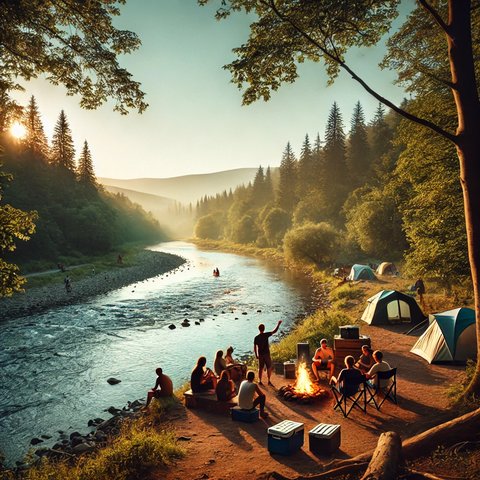 Group therapy in nature is a form of psychotherapy that uses natural settings as a therapeutic environment for group sessions. This approach combines elements of traditional group therapy with work in nature, based on the idea that interaction in natural surroundings can support participants' emotional well-being and deepen their connection with the environment and with one another.
Benefits of group therapy in nature:
- Reducing stress and anxiety: Nature itself can have a calming effect, and when combined with group psychological practices it may help reduce participants' stress and anxiety.
- Improving communication: Interaction outdoors may encourage more open and honest communication. This can help participants overcome barriers and build more trusting relationships within the group.
- Working with group dynamics: Nature provides a distinctive setting for exploring group dynamics, as participants may behave more naturally and freely than in conventional settings such as therapists' offices.
- Psychological restoration: Natural environments may support the restoration of emotional and physical balance. Participants may feel more relaxed and peaceful, which can support the therapeutic process.
- Developing empathy and support: During group therapy in nature, participants may better understand and support one another and develop empathy, making the process more meaningful and productive.
How does group therapy in nature work?
- Preparation: Before the session begins, the therapist explains the goals of therapy, the group rules, and the approaches that will be used. This may include becoming familiar with the natural setting and preparing for mindfulness and attention to the surroundings.
- Walks and mindfulness practices: Walks in a forest, park, or other natural place may form the basis of sessions. The therapist may invite participants to practice mindfulness by paying attention to surrounding sounds, smells, sensations, and thoughts. This can help develop a deeper connection with oneself and the surrounding world.
- Group discussions: After walks or other nature-based practices, the group may gather to discuss sensations and experiences. This helps participants become more aware of their emotions and receive support from others.
- Therapeutic tasks in nature: The therapist may suggest tasks involving interaction with nature, such as creating a “tree of life” from materials found outdoors or solving teamwork tasks together.
- Reflection and feedback: At the end of the session, the group may discuss how nature and group work affected their perception of themselves and others and their emotional state.
Examples of exercises in a group setting:
- Trust exercise: Participants may, for example, walk through a forest or another area while following a leader with their eyes closed, relying on the group and their surroundings. This can help strengthen trust and develop group interaction skills.
- Group games and exercises: Some outdoor group activities, such as searching for particular objects in a forest or building a shelter together from natural materials, may encourage teamwork, strengthen connections among participants, and increase engagement in the process.
- Meditation and relaxation: The group may spend time in silence practicing meditation or breathing exercises, which can promote relaxation and inner restoration. Exercises may focus on reducing stress and improving mood.
- Creative work with natural materials: Some groups use natural objects such as stones, leaves, branches, and similar materials to create collaborative art projects. This can help participants express feelings and experiences through creativity.
Effects on mental health:
Improving mood: Natural surroundings may help reduce depressive and anxiety symptoms and improve general emotional well-being.
Strengthening social connection: Group work in nature may support social bonds, mutual understanding, and support among participants.
Increasing personal confidence: Interaction with nature and successful completion of shared tasks can strengthen a sense of competence and self-confidence.
Applications of group therapy in nature:
Corporate training: Companies may use outdoor group sessions to strengthen team spirit and improve communication among employees.
Therapy for people with mental health conditions: Group therapy in nature may be used with people experiencing depression, anxiety disorders, post-traumatic stress disorder (PTSD), and other mental health conditions.
Rehabilitation after trauma: Group therapeutic sessions in nature may support people recovering from physical or psychological trauma through group support and restoration in natural surroundings.
Social work with vulnerable groups: Group therapy in nature may be useful with young people, older adults, refugees, and other vulnerable groups by providing a safe space for recovery and development.
Group therapy in nature offers distinctive opportunities for emotional recovery and growth. Nature can serve as a source of strength and support, while group dynamics help participants develop social skills, trust, and emotional awareness. This approach can be a useful tool for therapy and personal development, offering new ways to work with difficulties and stress in a more natural and relaxed context.
Kinesthetic Therapy
 Kinesthetic therapy is a form of therapy that uses movement, physical activity, and bodily sensations to work with emotional and psychological difficulties, reduce stress, and improve overall well-being. This approach is based on the idea that body and mind are interconnected and that movement and awareness of bodily sensations can support emotional well-being and help address psychological difficulties.
Main principles of kinesthetic therapy:
Kinesthetic therapy is based on the view that emotions, thoughts, and physical state are interconnected. Difficulties experienced psychologically often have bodily expressions, and conversely, physical pain or tension may be related to psychological difficulties.
In kinesthetic therapy, attention is paid not only to muscles and joints but also to how movement helps express emotions, experiences, and inner states. Sometimes physical movement allows a person to express what is difficult to put into words.
Kinesthetic therapy helps clients become more aware of their bodies, bodily states, and feelings. Through body awareness, people can learn to reduce tension, relax, and better understand their emotions.
Therapy may include different kinds of movement such as stretching, dance, breathing exercises, yoga, massage, and other forms of activity that help regulate emotional states and develop new strategies for managing stress and emotions.
How does kinesthetic therapy work?
During a kinesthetic therapy session, various exercises may be used to focus attention on bodily movement. These may include stretching, physical activity, work with posture, or awareness of each movement.
Attention is given not only to movement but also to breathing. Breathing exercises may help calm the nervous system and improve circulation, supporting relaxation and stress reduction.
Therapists may use dance movements as a way of expressing emotions. Dance therapy can include free or structured movement that helps release emotional tension, improve mood, and reduce anxiety.
Kinesthetic therapy may also include work with muscle tension. This may involve gentle stretching or more active exercises aimed at releasing bodily tightness.
Therapists may offer different game-based methods in which participants use bodily exercises and movement to complete tasks, developing coordination, relaxation, and awareness.
Benefits of kinesthetic therapy:
- Reducing stress and anxiety: Physical activity and attention to bodily sensations may help reduce stress and anxiety. Simple movement or relaxation through stretching can help calm a person and release tension.
- Improving mood: Kinesthetic therapy may promote processes associated with endorphin release, helping improve emotional well-being and reduce depressive symptoms.
- Increasing self-awareness: Kinesthetic therapy helps people better understand their bodies and emotional states. It teaches attention to one's own sensations and thereby supports mindfulness.
- Physical health: Regular exercise helps maintain physical health, improve flexibility, joint mobility, circulation, and overall fitness.
- Working with psychosomatic symptoms: Kinesthetic therapy may be used with problems associated with psychosomatic conditions — physical symptoms that are caused or worsened by psychological factors, such as headaches, back pain, or tension in the neck and shoulders.
Forms of kinesthetic therapy:
- Movement therapy: Uses different movements such as stretching, balance exercises, and coordination tasks to develop flexibility, strength, and body awareness.
- Dance/movement therapy (DMT): This is the therapeutic use of dance and movement to improve physical and emotional well-being. Dance therapy includes both improvisational and structured movement to express emotions and release tension.
- Yoga: Yoga within kinesthetic therapy may help improve flexibility and posture and teach relaxation through awareness of breathing and movement.
- Art therapy with movement elements: In some cases, kinesthetic therapy may be combined with art therapy, bringing movement and creativity together to help clients express feelings through art and physical expression.
- Massage and manual therapy: Sometimes kinesthetic therapy includes elements of massage that help relax tense areas of the body and reduce stress.
Applications of kinesthetic therapy:
For children: Kinesthetic therapy may be used with children to develop motor skills, improve coordination, and reduce anxiety through play and movement.
For people with psychosomatic conditions: Therapy may help people with chronic pain or symptoms associated with psychosomatic processes, such as back tension or headaches.
For people with injuries and postoperative patients: Kinesthetic therapy may be part of rehabilitation, helping restore movement and function after injuries or surgery.
For stress reduction: Kinesthetic therapy is widely used in stress management, where the goal is to reduce anxiety and support physical and emotional health through movement.
Kinesthetic therapy can be a useful tool for improving emotional well-being because it helps people become aware of their bodies and engage with them through movement. It can help develop flexibility, reduce tension, improve mood, and relieve stress. This approach may be useful in individual and group therapy and is also used in rehabilitation, work with psychosomatic conditions, and other areas.